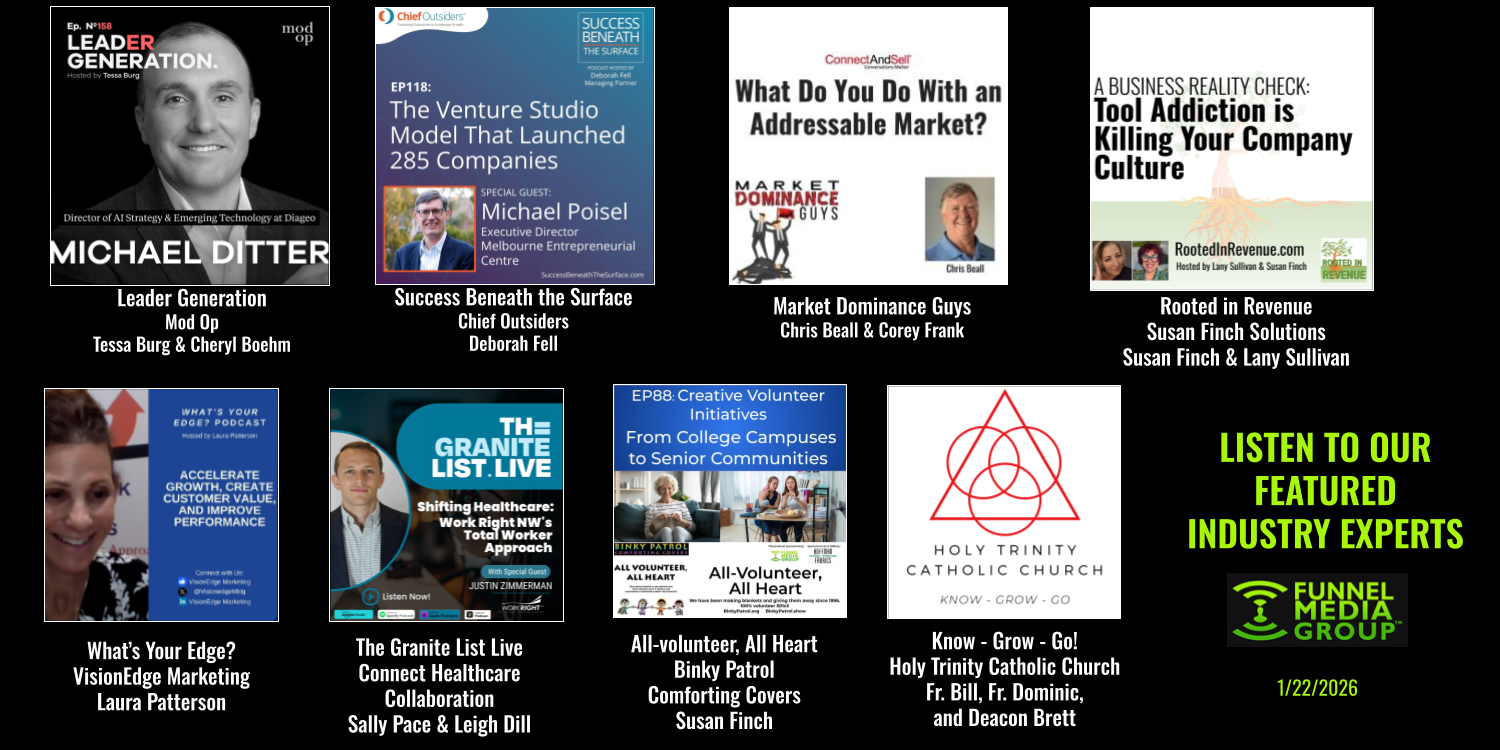
Tessa Burg sits down with Michael Ditter, Director of Artificial Intelligence Strategy and Emerging Technology at Diageo, to explore the transition from AI experimentation to scalable enterprise integration. With 15 years at the intersection of consumer goods, strategy, and technology, Michael shares how Diageo shifted from small pilots to a capability-led transformation focused on three core pillars: content creation, consumer insights at the speed of culture, and differentiated consumer experiences. The conversation reveals a refreshingly practical approach to AI adoption. Rather than chasing the latest tools, Michael emphasizes building human capability first, meeting people where they are, and starting each engagement by asking what’s the hardest challenge they’re working on right now. From day-long hands-on sessions to one-on-one coaching, his team has created a framework that balances innovation with responsibility, addressing concerns around bias, hallucinations, and data privacy upfront.
Michael Poisel left a successful venture capital career in the United States to become Executive Director of the Melbourne Entrepreneurial Centre. His mission is transforming Australia’s economy through innovation and company creation. After launching 285 companies at the University of Pennsylvania, Michael brought his venture studio model to Melbourne. He helps researchers commercialize their work without becoming entrepreneurs themselves. The approach builds companies for them, finds the management teams, and handles the complex business infrastructure that turns research into viable commercial enterprises. Michael shares hard truths about global entrepreneurship—countries where business failure can land you in jail, disappearing R&D budgets at major corporations, and why universities must step into the innovation gap. He explains why 40% of Australian companies have fewer than 10 employees, how he’s already started his first Melbourne company with 15 more in the pipeline, and why Australia actually has more accessible capital than the United States.
The pattern is everywhere: Someone attends a conference, hears about an amazing new tool, signs up with a discount code, and brings it back to the team. Three months later, nobody’s using it properly, it doesn’t integrate well, and the company is stuck paying for expensive shelfware. Sound familiar? In our latest episode, Susan Finch and Lany Sullivan break down why this keeps happening – and it’s not because people are reckless. They’re reactive. They don’t want to fall behind, they want that competitive edge, and vendors make it incredibly easy to say yes. We see the same patterns repeatedly: the conference tool trap, the new executive override, the shiny object syndrome that makes companies pile technology on top of unresolved problems. The solution isn’t more sophisticated software. It’s practicing restraint and asking better questions.
Celebrating 30 years of making a difference, Binky Patrol founder Susan Finch shares five strategic initiatives designed to expand volunteer recruitment and engagement for small nonprofits. From Greek life partnerships to senior community programs, these practical approaches offer actionable blueprints for organizations looking to grow their impact. She explores the untapped potential of senior communities where residents maintain crafting skills and desperately need purpose and community connection. Whether you run a nonprofit or want to understand volunteer mobilization strategies, this episode delivers concrete ideas you can implement immediately.
In this episode of What’s Your Edge?, Stacie Fell, president of Kana Roof joins the conversation. Stacie’s journey is a powerful illustraton of how the absence, or presence, of customer data can dramatially impact business decisions. They go behind the scenes to explore how a lack of customer insights created missed opportunities, and how a renewed focus on data has since transformed her decision-making.
Fr. Bill spoke about Ordinary Time. Ordinary Time teaches us that holiness is not built on excitement, but on fidelity. God is not just waiting for extraordinary moments to meet us — He meets us in the quiet faithfulness of daily life. And when our restless hearts finally rest in Him, we discover something surprising: the ordinary is no longer boring. It is sacred. It is where joy takes root.
We hope you enjoy this playlist of our favorite episodes of the week.