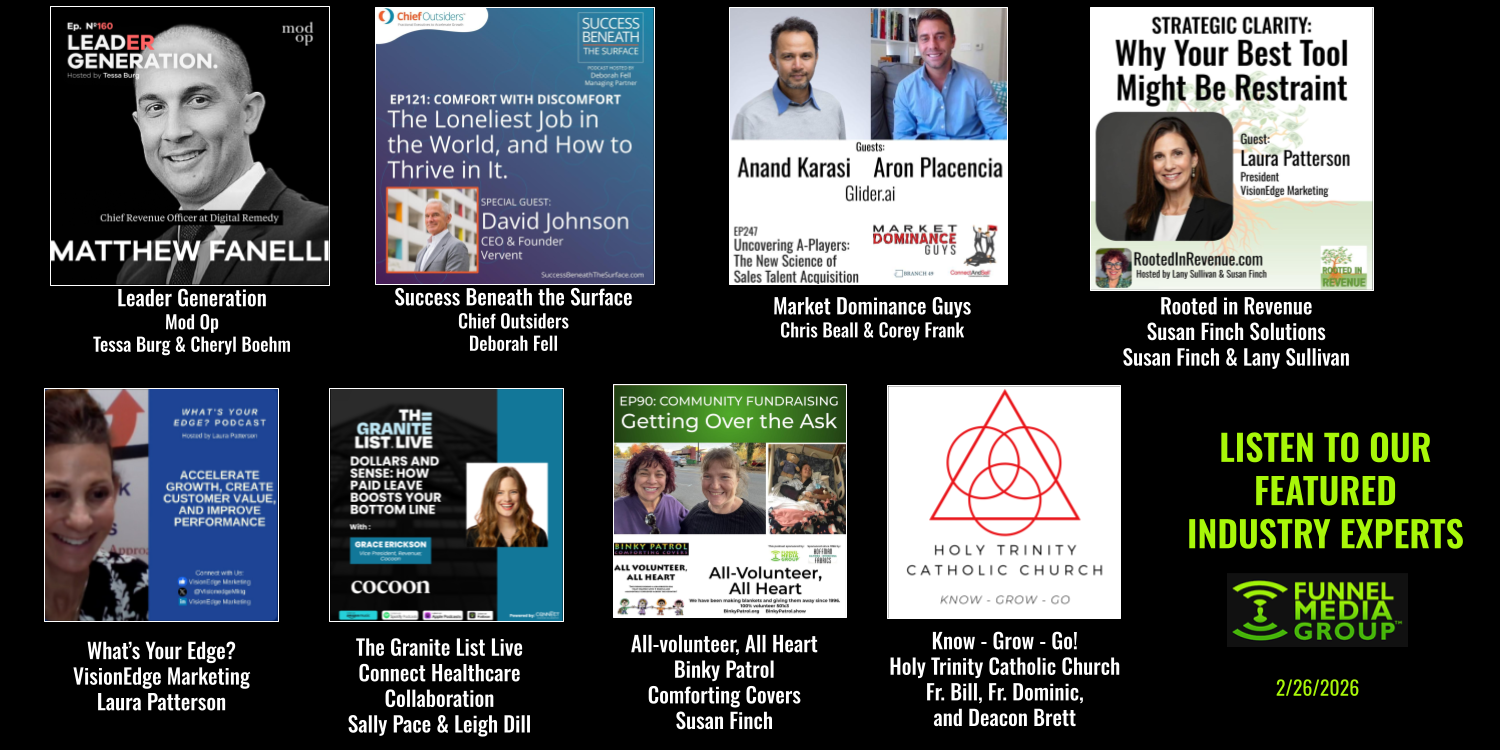
Marketing used to feel more predictable. You picked your channels, launched a campaign and tracked performance in a fairly linear way. Today? Consumers are bouncing between social, search, streaming, AI tools, connected devices and more—all before making a decision. In this episode, Matt Fanelli joins Tessa Burg to unpack what’s actually broken in marketing measurement and how leaders can rethink performance in a fragmented world. Matt breaks down why platform-led measurement often misses the mark, how attribution gets messy when multiple touchpoints influence a purchase and why defining “what success really looks like” is the first step most marketers skip. The conversation explores real-world examples—from healthcare to retail—and explains how better attribution, smarter use of AI and stronger human oversight can help teams build trust in their numbers again. If you’re responsible for performance, budget allocation or defending marketing results to leadership, this episode will give you a clearer framework for measuring what matters. It’s a practical conversation about cutting through the noise, focusing on quality over volume and building measurement strategies that actually reflect how people buy today.
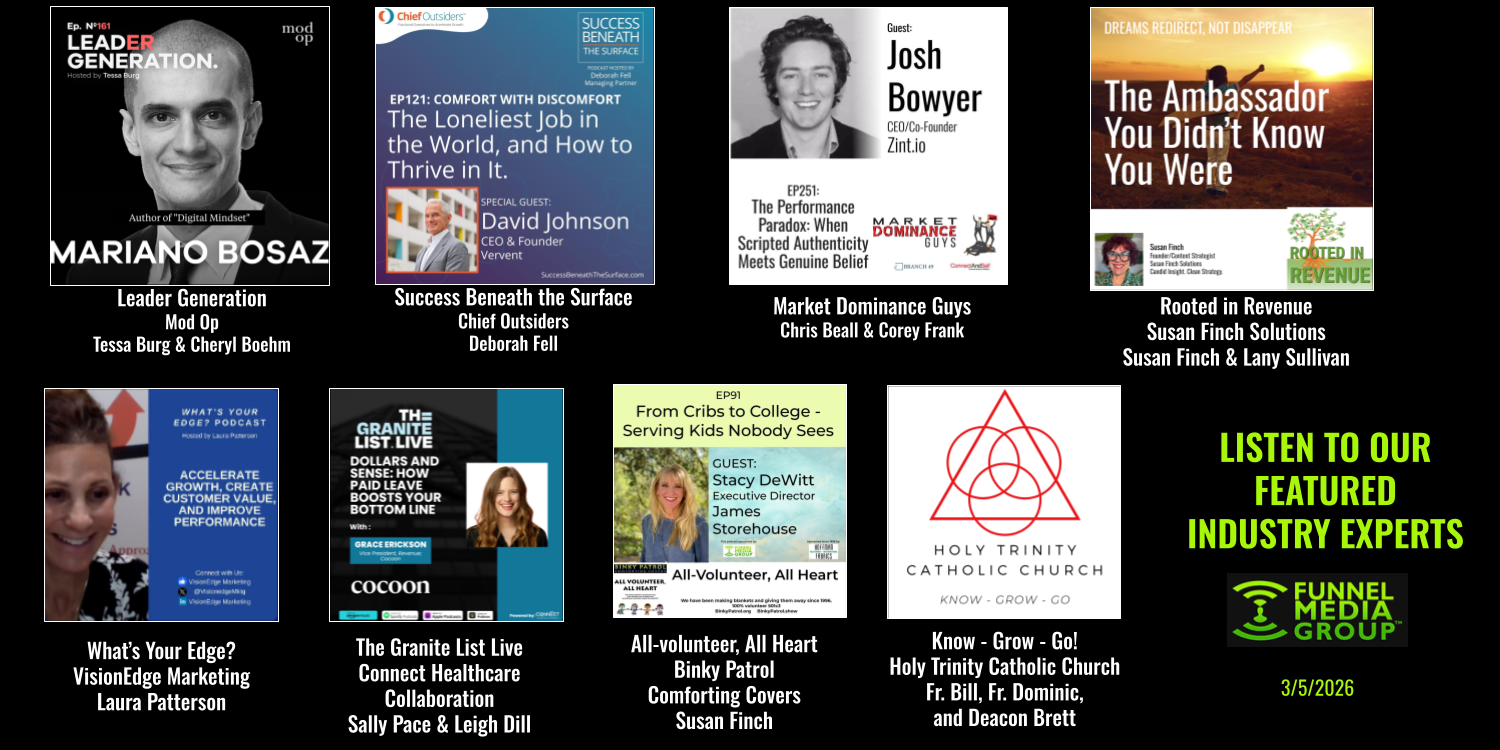
What does it take to build a fintech company from five people to 2,000 — entirely from scratch, then through strategic acquisition — without ever making excuses for the macro environment? David Johnson, CEO and Founder of Vervent, sat down with Deborah Fell to answer exactly that. David’s path wasn’t linear: he dropped out of high school at 16, found his way to UC Berkeley and Stanford, cut his teeth at Bain and McKinsey working private equity deals, then made the leap to build his own company in 2008 right in the middle of a financial crisis. Vervent, a leading consumer finance operating platform, now serves clients across the full FINTECH spectrum and has grown through both organic expansion and targeted acquisitions, backed by StonePoint Capital since 2019. This conversation goes deep on the habits, mindset, and cultural principles that have sustained David’s leadership across nearly two decades. He’s blunt about the loneliness at the top, honest about the team members who couldn’t scale with the company, and practical about what it actually means to act when the outcome is uncertain.
Susan Finch sits down with Laura Patterson, President and Co-Founder at VisionEdge Marketing. They explore why businesses chase shiny new tools instead of maximizing what already works, the real cost of remote work on mentorship and professional development, and how strategic restraint might be the most powerful tool in your marketing arsenal. Laura brings decades of experience helping companies achieve measurable business outcomes through marketing, while Susan brings her perspective from working with business-focused podcasts and small- to mid-size companies. Together, they challenge the assumption that more tools, more content, and more technology automatically equals better results. The conversation moves from the “random acts of marketing” that plague so many businesses to the critical importance of in-person mentorship for young professionals. Laura shares insights from her 20-year intern program, while both hosts discuss how the shift to remote work has created a mentorship crisis that’s hurting the next generation’s ability to navigate difficult conversations and workplace dynamics. Whether you’re drowning in marketing tools, struggling to find clarity in your strategy, or wondering how to bring up the next generation of professionals, this episode offers a refreshing dose of reality and actionable wisdom.
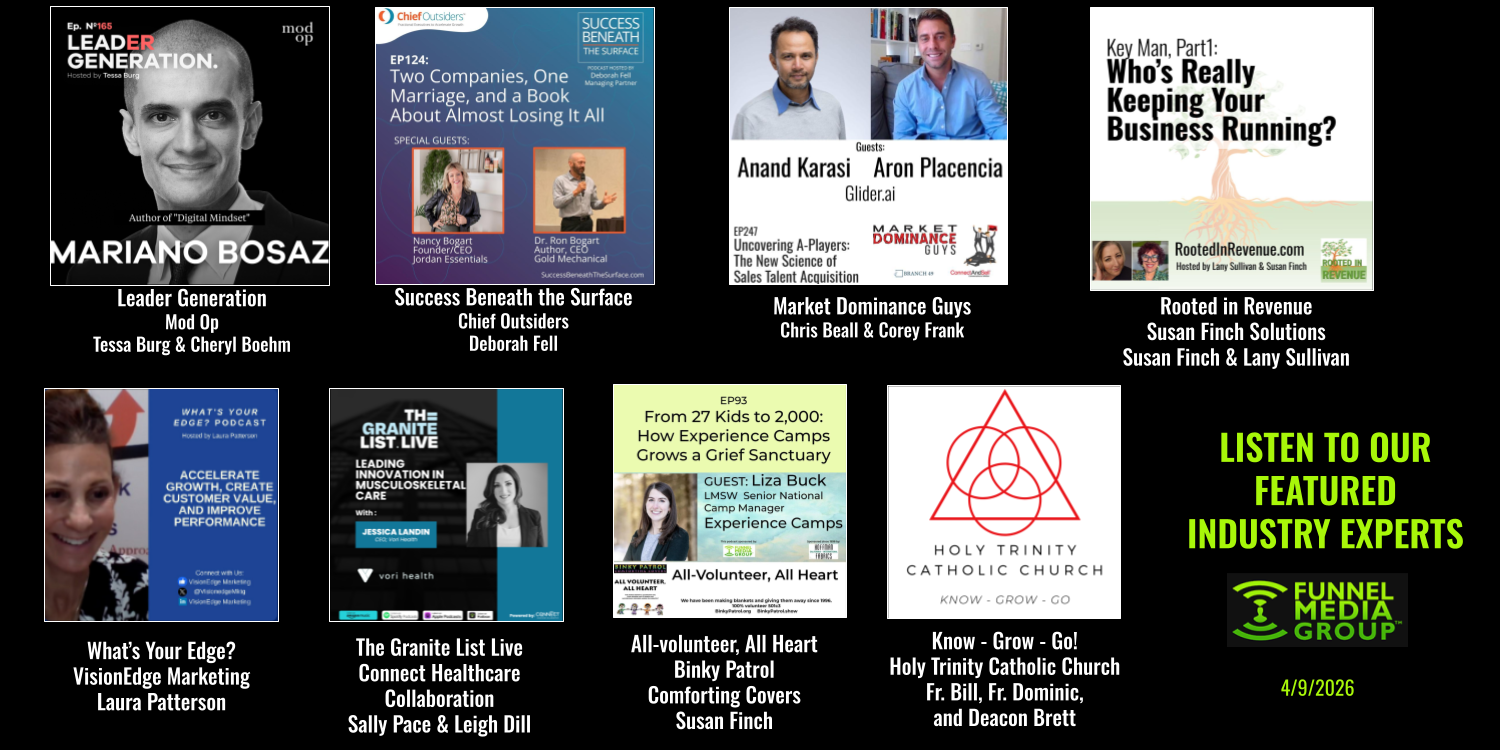
Aron Placencia and Anand Karasi from Glider.ai join Chris Beall and Corey Frank to tackle the perennial challenge of talent acquisition in sales. They’re not just talking about finding “good” people – they’re on the hunt for true “A players.” How do you spot them? What makes them tick? And how can you build a team full of them? From the pitfalls of traditional hiring to the power of curiosity in sales, this conversation pulls no punches. Tune in as they break down Glider.ai’s fresh approach to assessing and hiring top talent, and why it matters in today’s cutthroat sales landscape. Listen to this episode, EP247: “Uncovering A-Players: The New Science of Sales Talent Acquisition.”
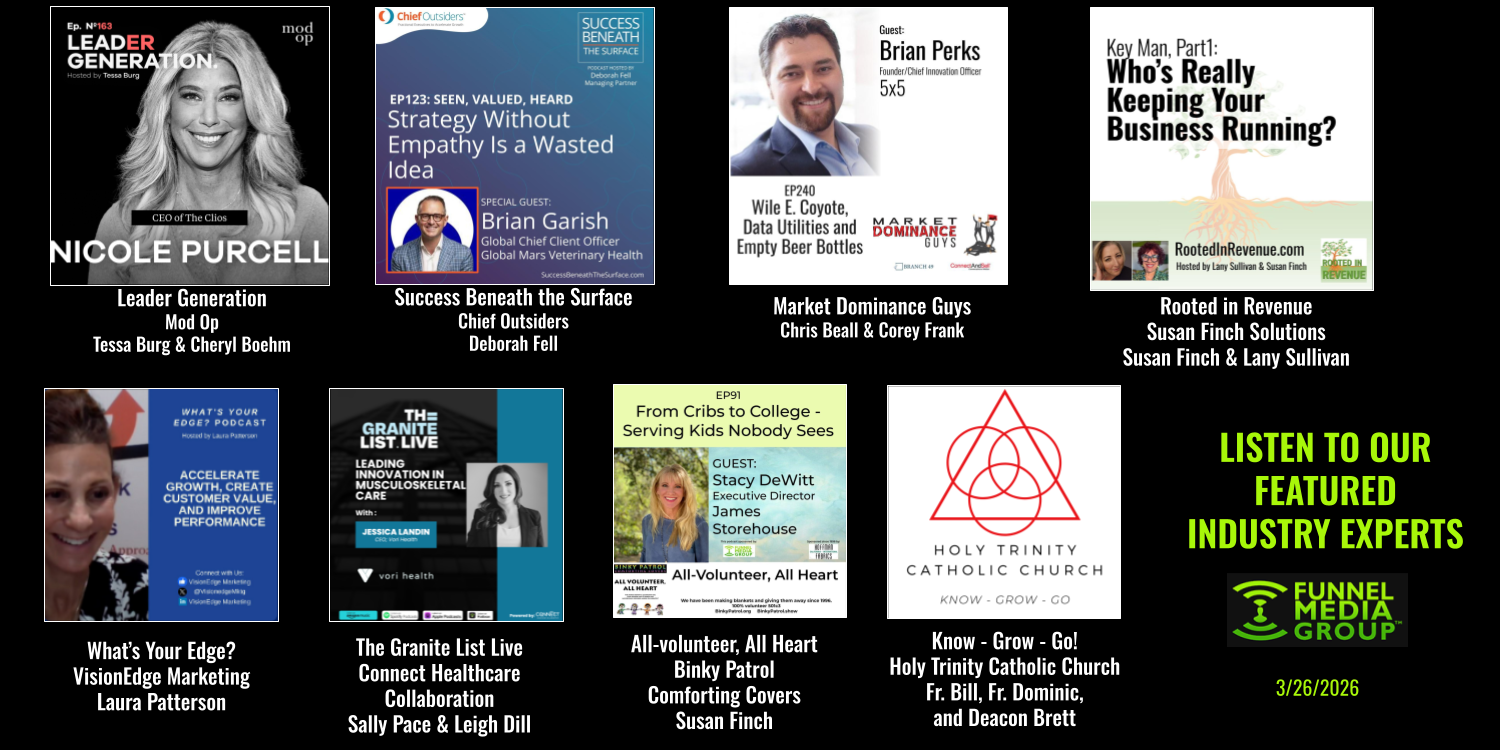
Jeanne Malgioglio has been running Binky Patrol’s Connecticut chapter for years, and she’s figured out something a lot of volunteers never do: how to ask for money without hating every second of it. In this episode, Susan Finch sits down with Jeanne to talk through what actually works when it comes to local fundraising — and what’s mostly a waste of time. Jeanne shares why she skips the big community foundation grant cycles (too many hoops, too many closed windows) and goes straight to Rotary clubs, utility companies, car dealerships, and local businesses that want to be part of something good. She walks through how she builds her outreach letters — short, authentic, and focused on a specific urgent need — and why she tailors each one rather than sending a generic blast. They also dig into the power of Facebook community pages and neighborhood groups, how to make your events visible without being pushy, and how the next generation of volunteers — including students — are already taking initiative and learning to fundraise on their own. If your chapter or organization needs materials or money and you’re not sure where to start, this one’s for you.
Paid leave isn’t just a benefit—it’s a strategic investment in your most valuable asset: your people. On this week’s episode of The Granite List.Live, Sally is joined by Grace Erickson, VP of Revenue for Cocoon. Together, they dive into why comprehensive leave policies are the secret weapon of forward-thinking companies and how supporting employees through life’s pivotal moments is your competitive advantage. Spoiler alert: When you show up for your team, they show up for your business.
Today’s conversation on What’s Your Edge explores how a lean process improvement initiative, originally launched to address patient complaints about long wait times, evolved into something much more: a deeply embedded customer-centric culture grounded in customer value and customer-centricy, and a move away from random acts of efficiency toward a systematic, measurable approach to customer experience. Stephanie Collins, CEO of Austin Retina, a practice that has been serving patients since 1979, joins us today as our guest for What’s Your Edge. Stephanie has been with the organization for 25 years, rising through the ranks to lead the practice through significant growth. The practice has grown from a single provider to 19 physicians and nearly 300 employees. And recently, it became a part of Cencora, a global leader in pharmaceutical and medical supply distribution. Stephanie, I’m looking forward to learning how Austin Retina reframed time as a critical dimension of value, how you operationalized customer-centricity, and how you measure the impact of customer value on growth, loyalty, and performance.
Fr. Dominic had a challenging and hopeful message. Letting God work on our hearts is a dangerous and difficult business — because it means giving up control. It means saying ‘yes’ to people and to situations that you would never have chosen yourself. Most of us are terrible when it comes to changing our own hearts, so here’s my encouragement: give your heart to God. Submit to the slow and often painful work of His grace, and trust that He’ll get you where you need to be.
We hope you enjoy this playlist of our favorite episodes of the week.