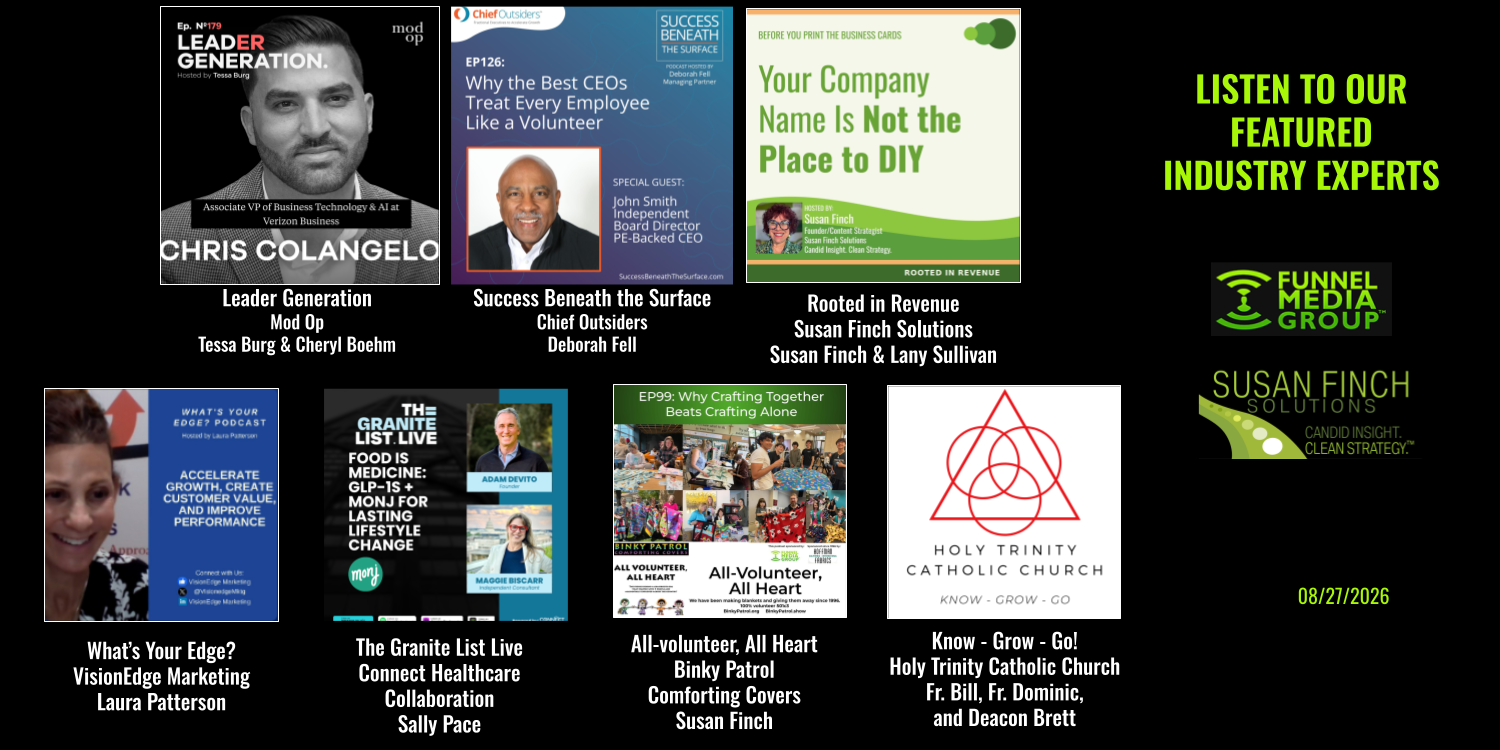
AI can make existing work faster, but its greatest value may come from helping organizations rethink the work altogether. In this episode of Leader Generation, Tessa Burg talks with Chris Colangelo, AI leader for Verizon Business Group, about how leaders can move beyond incremental improvements and use AI to solve bigger customer and employee challenges. Chris shares practical lessons from leading AI transformation at scale, including how to find the right starting points, build momentum with willing teams and help employees focus on the value they bring rather than the tasks they perform today. You’ll also hear how AI is changing marketing through campaign simulation, smarter personalization and closer coordination between marketing and sales. Listen to learn why AI should start with a real problem rather than a technology, how faster processes can elevate human thinking and why understanding customer rejection may be just as important as measuring conversion.
Naming your company is not a job for a Friday night and a six pack. On this episode, Susan breaks down the naming mistakes she runs into constantly with DIY clients, names nobody can spell, names so long the URL wraps around a football jersey, and taglines that are just template filler nobody bothered to replace. She walks through real examples, including a flower shop called Petallica and a fish and chips stand called Frying Nemo, plus a client who brought in a domain without checking who already owned the .com. Susan covers what to check before you fall in love with a name, trademarks, state business licenses, WhoIs lookups, and why your tagline needs to come from a mission statement, not a mood. If you have not locked in your name yet, listen before you print anything.
John D. Smith has led turnarounds across nine industries, from consumer retail to Caesars Entertainment, where he moved from retail executive to resort CEO in under five months. Raised in the Philadelphia projects and later a Harvard Business School graduate, Smith joins Deborah Fell to trace how football discipline, McKinsey training, and firsthand experience on factory floors and casino floors shaped his leadership approach. Smith breaks down his three-to-five-year transformation model: diagnose how the business generates cash, right-size the infrastructure, then rebuild trust with frontline teams before any strategy sticks. His core belief is that organizations only transform once their people do, and leadership is a behavior, not a position. This conversation covers what it really means to show up as a leader, why he treats every employee like a volunteer, and the discipline required to do the unglamorous work no one is watching.
Susan Finch spent last weekend running what she calls Fleece Weekend, handing out $1,200 worth of donated fabric to Binky Patrol volunteers in ten- and fifteen-minute visits at her Beaverton home. In this episode, she reflects on what she noticed during those short visits and what it revealed about the difference between artists and crafters, knowing that the two merge quiet frequently. Artists, she says, tend to create alone – they get in their zone. Crafters crave, or thrive being part of a community, even when they finish a project on their own. Susan talks about feeling isolated during a normal work week and why gathering with other volunteers, even briefly, brings a different kind of joy than solitary creative work. She also shares why she believes people right now want a way to feel useful and connected, and how a single hour a month making blankets for kids in need can do exactly that.
Most of us are wrestling with change. Whether it’s because of accelerating technology cycles, disruptive technologies challenging established models, competitive pressures intensifying, or something else, we risk becoming dinosaurs. How do you future-proof your company, and what does that mean? For leaders and boards alike, this question has become less about optional innovation and more about long-term relevance, risk management, and enterprise resilience. Join Laura Patterson as she talks about these questions with Dave Work, Managing Partner of Diversicom Corporation.
GLP-1 therapies can help patients lose weight and improve health outcomes. But without positive and sustainable lifestyle changes, like proper nutrition, healthy cooking habits and movement, patients risk:
* Plateauing or regaining weight. * Poor adherence to GLP1’s and early discontinuation * Unsustainably high healthcare costs for self insured employers and beyond
This week Sally is joined by Adam DeVito, Founder of Monj, and Maggie Biscarr as they explore how coupling GLP-1 therapy with Monj’s practical, hands-on approach delivers the missing link. Monj has helped many people take charge and measurably improve their metabolic health along with emotional and psychological wellbeing, through food.
Beauty is still one of the most – maybe the most – potent way we have of experiencing and encountering God. It retains this ability to disarm us, to lower our defenses, to capture and captivate us, to invoke a sense of the transcendent. God uses beauty to touch hearts, to lift people out of despair, to soften their cynicism, to lighten their darkness – and He wants to do that for you as well.
We hope you enjoy this playlist of our favorite episodes of the week!