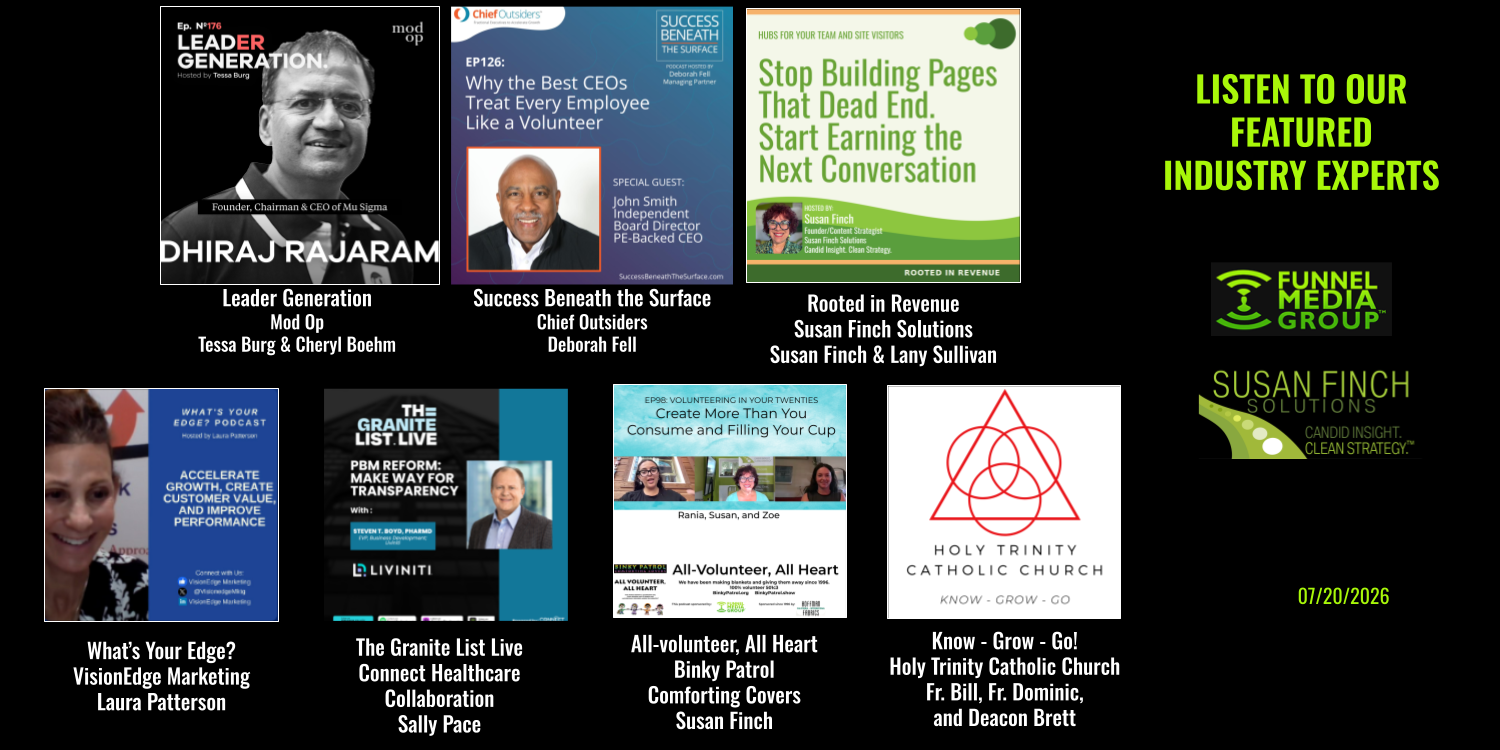
Every marketer and business leader is talking about AI right now, but many companies are stuck. They’ve run the pilots, tried the tools and still can’t turn any of it into real results. In this episode, Tessa Burg talks with Dhiraj Rajaram, Founder and CEO of Mu Sigma, about why that gap between AI hype and AI impact exists. And what it actually takes to close it. Dhiraj breaks down some big ideas in an easy-to-follow—and very entertaining—way, like why every new technology creates a bubble and why AI is no different. He explains why most companies are trying to bolt AI onto old ways of working rather than rethink how decisions are made. If you’ve ever wondered why your company’s AI investment has not paid off the way you had hoped, this conversation will give you a new way to think about the problem. You’ll walk away with practical language and a framework you can bring back to your own team along with a clearer picture of what needs to change before any new technology can really move the needle.
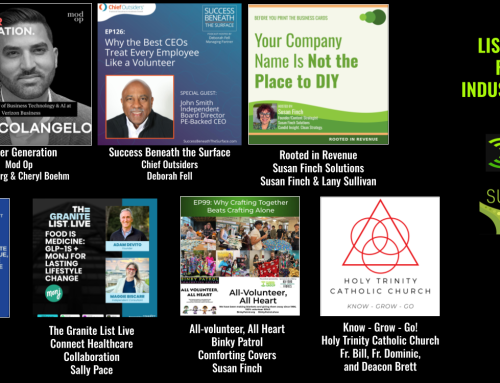
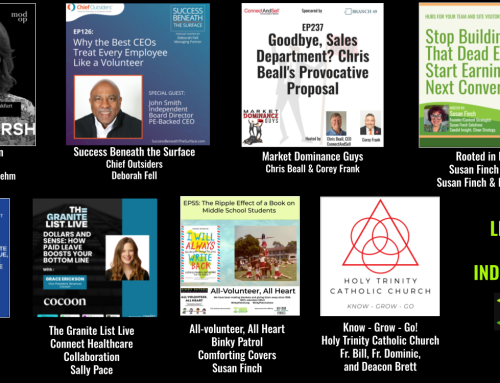
John D. Smith has led turnarounds across nine industries, from consumer retail to Caesars Entertainment, where he moved from retail executive to resort CEO in under five months. Raised in the Philadelphia projects and later a Harvard Business School graduate, Smith joins Deborah Fell to trace how football discipline, McKinsey training, and firsthand experience on factory floors and casino floors shaped his leadership approach. Smith breaks down his three-to-five-year transformation model: diagnose how the business generates cash, right-size the infrastructure, then rebuild trust with frontline teams before any strategy sticks. His core belief is that organizations only transform once their people do, and leadership is a behavior, not a position. This conversation covers what it really means to show up as a leader, why he treats every employee like a volunteer, and the discipline required to do the unglamorous work no one is watching.
Two unrelated client projects landed in Susan Finch’s lap the same week — a document hub for Dan Pflugshaupt (Gallery of Homes, CSSE, NRBA) and FAQ content built for AI answer engines for Michele Scherger on Florida’s Treasure Coast. Different clients, different states, same underlying problem: ads and content that dump people on a homepage instead of giving them a real answer. Susan walks through what changes when every page has to stand completely on its own, why Corey Frank and Chris Beall’s “earn the next conversation, not the close” philosophy from Market Dominance Guys applies far beyond sales calls, and how a resource hub organized by real-world sequence beats a folder full of files every time. Includes a practical homework list anyone can run on their own site this week.
Rania Dudum and Zoe Rucker are in their early twenties, juggling work, school, roommates, and everything else that comes with that stage of life. They still make time for Binky Patrol, and in this episode, they tell Susan why. Rania describes her first Bink-A-Thon, where volunteers who had never met made nearly 300 blankets in five hours. Zoe explains why the lowest barrier to entry she has ever seen keeps her coming back. Together, they cover eight new chapters opened this year, a crochet creator with 200,000 followers who posted about Binky Patrol after a single message, and the legacy afghans that found new purpose with children in crisis. Susan closes with a look back at 30 years and a wish: a Binky Patrol chapter in every county in America.
When the world, social media, or certain politicians and podcasters would have us see one another as enemies, remember that this is demonic in the most basic sense of the word — “demon” from the Greek word meaning to divide or to scatter. As we celebrate 250 years together, my challenge to you is to resist that scattering. Cast out the demonic. There’s a lot of good out there, my friends, if we’re willing to claim it.
We hope you enjoy this playlist of our favorite episodes of the week!